

The unit rate is linked to how much electricity you consume. Other network charges can respond to how your site uses electricity: how high its demand climbs during its busiest periods and how much reactive power its equipment draws.
These charges are often grouped within the non-commodity section of the bill. Because they involve technical terms and calculations, finance teams may see them as a single block of third-party costs without examining what is driving them.
The charges vary by distribution network operator (DNO), tariff and metering arrangement. They can include charges for demand above the site’s agreed capacity and charges for excess reactive power, which may arise when a site has a poor power factor.
These are two different charging mechanisms, but both can be influenced by how a site operates. Understanding the half-hourly demand data and the applicable network charging rules is the first step towards identifying whether there is an opportunity to reduce the costs.
What These Charges Respond To
- Demand above the agreed capacity. A site’s Maximum Import Capacity (MIC) is the level of capacity agreed for its electricity connection. Maximum demand is the highest demand recorded over the relevant measurement interval. Where the applicable tariff includes excess capacity charging, demand above the agreed capacity can trigger additional charges. Not every half-hourly metered site is subject to this arrangement.
- Reactive power. Equipment such as motors, compressors and some industrial and cooling systems draws reactive power alongside active power. When reactive energy exceeds the allowance under the applicable network tariff, reactive power charges can apply. The amount depends on the site’s power factor and the charging rules used by its network operator.
- Start-up demand. Large motors, compressors and machinery can increase demand when they start. A brief electrical start-up transient will not necessarily create a high recorded half-hourly demand. However, if several loads start together or operate at high demand for a significant part of a half-hour interval, they can raise the site’s recorded maximum demand.
- Coincident operation. Several large loads switching on or operating at the same time, such as at the start of a shift, can push demand above the level expected from looking at each piece of equipment individually.
- Seasonal peaks. Cooling and refrigeration in summer, or heating in winter, can increase demand during particular periods. If these loads coincide with other equipment, they may contribute to higher recorded demand or reactive power consumption.
Read: Are You Paying for Electricity Capacity You Never Use
Why a Single Event Can Matter
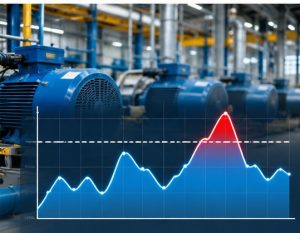
The way these charges are calculated depends on the network operator’s methodology and the site’s tariff. However, some arrangements are influenced by demand peaks rather than average monthly consumption.
For example, a single half-hour interval in which recorded demand exceeds the agreed capacity may be enough to trigger an excess capacity charge under the applicable tariff. The precise calculation and billing consequences depend on the network operator’s rules.
This means ordinary operational events can have a disproportionate effect. A commissioning test of new equipment, a generator changeover, a plant restarting after a shutdown or several machines operating together can produce an unusually high half-hour of demand.
Because the overall monthly electricity consumption may still look broadly normal, nobody connects the additional charge to the operational event that caused it.
Reactive power charges work differently. They are generally calculated using reactive energy recorded across relevant measurement intervals, with amounts above the applicable allowance contributing to the charge for the billing period. A single high-demand interval does not automatically mean a reactive power charge has been triggered.
Understanding the difference matters because the action needed to address excess capacity may be different from the action needed to improve power factor.
Why It Goes Unreviewed
There are three reasons.
First, the electricity bill may present these charges as a total or as a handful of lines described in technical language that does not explain what behaviour caused them.
Second, the half-hourly data that could help explain the charges is held within the site’s metering and data collection arrangements. Finance teams do not always have access to it or know how to interpret it.
Third, reducing some of these charges can involve an engineering decision. Managing peak demand may require changes to operating schedules or load management, while addressing poor power factor may require inspection or adjustment of power factor correction equipment. The discussion therefore needs both financial and technical input and can easily fall between departments.
It also helps to understand why a supplier comparison alone may not solve the problem. The underlying distribution network charges are set by the relevant network operator, not negotiated in the same way as the commodity unit rate. Changing supplier does not remove the network charge or change the site’s demand profile.
Suppliers may structure how these costs are recovered differently under their commercial contracts, but the underlying causes still need to be understood and addressed. That starts with knowing what is actually driving the charges.
Why Power Factor Problems Persist
Reactive power charges can continue even after a business has installed power factor correction equipment. That is because the effectiveness of the equipment depends on the site’s electrical loads and how the correction system is configured and maintained.
Where correction equipment was installed years ago, its performance may deteriorate because of failed components, incorrect settings or changes in the site’s operating conditions. New machinery, changes in production patterns or equipment operating at lighter loads can also alter the site’s power factor.
Power factor describes the relationship between active power, measured in kilowatts (kW), and apparent power, measured in kilovolt-amperes (kVA). A poor power factor means that more current is needed to deliver the same amount of useful active power.
The result can be higher reactive energy consumption and, where the applicable tariff imposes charges for it, additional costs on the electricity bill.
Whether it is worth taking corrective action depends on the size of the charges, the cost of the proposed solution and the practical requirements of the site.
A site with modest reactive power charges may find that doing nothing is the most sensible decision. A site with large motors and consistently poor power factor may have a stronger case for investigating correction equipment or changes to its electrical installation.
Power factor correction should not be treated as an automatic solution. The site’s electrical characteristics and load profile need to be assessed before deciding what action is appropriate.

Who This Hits Hardest
- Manufacturing and process sites with large motors, compressors and machinery that can create high demand when starting or operating together.
- Sites with significant cooling or refrigeration requirements, where several pieces of equipment may operate simultaneously and contribute to demand or reactive power consumption.
- Businesses that have recently added equipment without checking how the new loads affect the site’s demand profile or power factor.
- Multi-site operators where only some locations have had their half-hourly data analysed, leaving potential demand and reactive power issues unidentified at other sites.
Signs It Is Worth Investigating
- Your network charges vary noticeably from month to month without an obvious change in the site’s operations or electricity consumption.
- Your electricity bills contain excess capacity or reactive power charges that nobody in the business can explain.
- Your site has large motors or compressors but has never had its power factor assessed.
- You have added machinery, refrigeration, heating or other electrical equipment without reviewing how it affects your demand profile.
- You have never had your half-hourly data reviewed specifically to understand what drives your network charges.
These charges should not automatically be treated as unavoidable parts of an electricity bill. Some can be influenced by how and when a site uses electricity, how its capacity is managed and whether its power factor needs attention.
The first step is to examine what the site is doing during its most demanding half-hours and understand how that behaviour relates to the charges appearing on the bill.
The businesses that benefit are not necessarily the ones with the biggest electricity bills. They are the ones that notice an unexplained pattern, investigate what is behind it and use the available data to determine whether action is worthwhile.
A significant part of these costs may be avoidable, but the opportunity can only be established once the underlying charges and site behaviour are properly understood.

Find Out What Is Driving Your Demand-Related Charges
Ecotilities can review your half-hourly electricity data to help identify demand patterns and potential excess capacity issues. Where reactive power charges appear on your bill, the scope of the review should also establish whether a reactive power assessment is required.
Understanding what is driving these costs can help your business identify practical opportunities to manage demand and reduce avoidable network charges.
Visit ecotilities.co.uk/kva-analysis or call 0333 2244 050.
Questions Businesses Ask
Do these charges apply to every business?
No. They depend on the site’s metering arrangement, distribution network operator and applicable electricity tariff.
Certain site-specific half-hourly metered supplies may include excess capacity and reactive power charges, while other arrangements use different network charging structures. A review of your electricity bill and tariff will establish which charges apply to your site.
Can a single high-demand half-hour really affect our bill?
It can, depending on the applicable charging arrangement.
Under some site-specific half-hourly tariffs, a single recorded demand interval above the agreed capacity can trigger an excess capacity charge. The exact calculation and billing impact depend on the network operator’s methodology.
Reactive power charges are calculated differently and generally depend on the reactive energy recorded across relevant measurement intervals during the billing period.
What is power factor and why does it matter?
Power factor describes the relationship between the active power a site uses, measured in kilowatts (kW), and its apparent power, measured in kilovolt-amperes (kVA).
A poor power factor means that more current is required to deliver the same useful active power. Equipment such as motors and compressors can contribute to reactive power demand.
Where reactive energy exceeds the allowance under the applicable network tariff, additional reactive power charges may apply. Improving power factor can help reduce these charges where the site’s tariff and electrical conditions make corrective action worthwhile.
Will switching supplier reduce these charges?
Not automatically. The underlying distribution network charges are set by the relevant network operator, so changing supplier does not remove the charges or change the site’s demand profile.
However, suppliers may structure how network costs are recovered differently under their commercial contracts. The underlying demand or power factor issue still needs to be investigated if the business wants to address its cause.
Do we need new equipment to reduce them?
Not necessarily. Some issues can be addressed through changes to how and when equipment operates, such as avoiding unnecessary simultaneous demand or managing the timing of large loads.
Other situations may require inspection, adjustment or replacement of power factor correction equipment. The appropriate solution depends on the site’s demand data, electrical installation and the charges being incurred.
A proper assessment should establish what is causing the problem before recommending new equipment or operational changes.
Does a review cost anything?
An initial review with Ecotilities is free and carries no obligation. Ask the team to confirm the scope of the review, the data required and whether reactive power assessment is included before proceeding.