

Measured in kVA, this figure represents the maximum power the property is authorised to draw from the network at any one time. It is established when the connection is first arranged or subsequently upgraded, based on the site’s expected demand and the capacity it needs to operate reliably.
The problem is what happens next: the site’s operations may change, but its agreed capacity is not always reviewed.
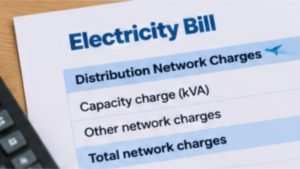
For certain commercial electricity tariffs, particularly site-specific half-hourly metered demand arrangements, the distribution network charges include a capacity charge linked to the agreed figure. This is typically calculated on a pence-per-kVA-per-day basis, meaning the charge is based on the capacity agreed rather than how much of that capacity the site actually uses.
However, not every half-hourly metered site has a separate capacity charge. Aggregated metered demand tariffs, for example, can have a different charging structure. The applicable tariff and the site’s billing arrangement determine which charges apply.
Where a capacity charge applies, a site that inherited capacity from a larger previous operation, planned for expansion that never happened or simply reduced its demand may continue paying for capacity it no longer needs. It can remain an overlooked part of the network charges on the electricity bill.
Where the Overpayment Comes From
- Capacity agreed generously at connection: The original capacity may have included headroom for anticipated growth or future equipment, with no later review of whether that level is still necessary.
- Capacity inherited from a previous occupier: A business moves into premises previously occupied by a larger or more energy-intensive operation and retains the existing connection capacity, even though its own requirements are lower.
- Equipment replaced with more efficient versions: Upgrading lighting, motors and cooling systems may reduce peak demand while the agreed capacity remains unchanged. Actual demand data is needed to establish whether this has happened.
- Sites downsized, consolidated or partly closed: The business reduces its operations and electricity demand, but the agreed capacity is never revisited.
- Capacity set around an unusual demand requirement: A connection may have been arranged to accommodate a temporary installation, major test or other unusual operating requirement rather than the site’s normal long-term demand.
- Several sites each sized independently: A business operates multiple premises, each with its own agreed capacity, but nobody compares the figures against actual demand across the group.
Why Nobody Looks at It
Agreed capacity often falls between departments. It appears within the network charges portion of the electricity bill, which may be passed through by the supplier. The underlying capacity level is agreed with the distribution network operator, not negotiated in the same way as the commodity unit rate.
A supplier comparison focused primarily on commodity prices may therefore leave the capacity question untouched. Finance sees a technical number that someone in engineering must have chosen carefully. Engineering sees a cost line that appears to belong to finance. The result is a charge that nobody has specifically taken responsibility for reviewing.
There is also a perception problem. Because the figure is expressed in kVA, it can feel like a specialist matter that only an electrical engineer can interrogate.
In reality, the question has a clear financial dimension: how much capacity is the business paying for, what is its actual demand, and is the current arrangement still appropriate?
Answering it requires the agreed capacity for each relevant meter, the applicable network charging structure and the site’s half-hourly demand history. This is the analysis many businesses have never had carried out.
The Other Side of the Risk
It would be a mistake to treat this as a simple case of asking for less capacity.
Reduce it too far and the site may exceed its agreed capacity. Where the applicable tariff includes an exceeded capacity charge, additional charges can arise when demand goes above the agreed limit. Under the Common Distribution Charging Methodology, exceeded capacity charges for applicable half-hourly settled demand tariffs are calculated on a p/kVA/day basis and can apply for the duration of the month in which the breach occurs.
Those charges could outweigh the savings from reducing the agreed capacity.
Increasing capacity again later can also involve an application to the distribution network operator, an assessment of the connection and potentially additional costs or lead times. Once capacity is released, the original level may not automatically be available again, particularly if the network has since allocated that capacity elsewhere.
The process and restrictions vary between network operators. For example, National Grid Electricity Distribution and UK Power Networks state that capacity changes are generally limited to once within a 12-month period and that reductions cannot be backdated.
The right figure must therefore be calculated using actual demand data and a sensible allowance for how the site will operate in the future. Historical demand is important, but so are planned equipment additions, changes in operating hours and future expansion.
That balance is why capacity reviews are best done properly or not at all. A reduction made without sufficient data can cost more than it saves. Equally, a review that finds the existing capacity is already appropriate is a useful outcome because it replaces an assumption with evidence.

Why Capacity Matters More as Energy Use Changes
The question is becoming more important, not less. Businesses are adding electric vehicles, electric heating and more electrified equipment to connections that were sized for a very different pattern of use.
For some sites, these additions mean the agreed capacity that was generous for years may soon become a constraint. For others, efficiency improvements, downsizing and changes in operations have left a significant gap between the capacity agreed and the demand actually recorded.
Both situations can be missed until someone compares the agreed figure with the site’s demand history and considers what the business expects to need in the future.
What a reduction could save depends on whether the applicable tariff includes a capacity charge, the rate charged per kVA and the amount of capacity that can safely be released. An initial estimate can be made using the agreed capacity and applicable network charge. However, deciding whether a reduction is appropriate requires a closer analysis of actual demand and future requirements.
A relatively small difference per kVA, multiplied across a large capacity, a full year and several sites, can become a meaningful annual cost. That is why a review is worth considering even when the capacity charge looks small on a single invoice.
Who This Hits Hardest
- Businesses that moved into premises previously occupied by a larger or more energy-intensive operation and retained the existing connection capacity.
- Sites that have been through efficiency upgrades or process changes without anyone checking whether their peak demand has changed.
- Multi-site operators whose premises were connected at different times under different assumptions, with no central review of their agreed capacities.
- Businesses with site-specific half-hourly metered supplies that include capacity charges but have never compared their agreed capacity against their actual demand history.
Signs It Is Worth Checking
- You cannot say what the agreed capacity is for each of your relevant electricity meters.
- You have changed the equipment, layout or operating hours of a site since its connection capacity was originally agreed.
- Nobody has compared your highest recorded demand against your agreed capacity and considered whether the remaining headroom is necessary.
- Your electricity bill includes capacity or other network charges that have never been reviewed separately from the commodity unit rate.
- You are planning to install electric vehicle chargers, electric heating or other equipment that could materially change your site’s peak demand.
Capacity is one of the parts of an electricity bill where the cost can be influenced by a connection decision made years ago. Looking at it properly is the way to establish whether that decision still makes sense for the business today.
Find Out Whether You Are Paying for Capacity You Don’t Need
Ecotilities carries out kVA analysis using your site’s actual half-hourly demand data, comparing recorded demand against the agreed capacity. This helps establish whether there may be scope to reduce capacity while retaining a suitable margin for the way your business operates and what it expects to need in the future.
Where a reduction appears appropriate, the relevant next step is to discuss the proposed change with the distribution network operator.
Visit ecotilities.co.uk/kva-analysis or call 0333 2244 050.
Questions Businesses Ask
How do we find out what our agreed capacity is?
It is usually shown on your electricity bills or connection documents. Depending on the network operator, it may be labelled Maximum Import Capacity (MIC), Available Supply Capacity (ASC) or Maximum Power Requirement (MPR).
Your electricity supplier or distribution network operator can confirm the figure. A proper review should check the relevant capacity for every meter rather than relying on a single site-wide number.
Is it always possible to reduce capacity?
Not always. You can apply to your distribution network operator for a reduction, but the requested level must be suitable for your site’s actual and anticipated demand. The network operator will assess the request and confirm whether the change can be agreed.
The process and restrictions vary between network operators. Some limit how frequently capacity can be changed, and reductions may not be backdated. It is important to establish the requirements before making a decision.
What happens if we reduce capacity and then need more?
Increasing capacity later can involve an application, a network assessment and potentially additional costs or a lead time. The original capacity may not be available immediately once it has been released back into the network.
This is why a reduction should leave a sensible margin for actual demand and future operating requirements rather than being based only on the lowest demand recorded in the past.
Does this apply to small businesses?
It depends on the site’s metering arrangement and distribution charging tariff, not simply the size of the business. Certain site-specific half-hourly metered supplies have capacity charges, while aggregated metered demand arrangements can have a different structure without a separate capacity charge.
The best approach is to check the actual electricity bill and confirm which network charges apply to the site.
Will changing capacity affect our supply contract?
Agreed capacity relates to your electricity network connection and is generally separate from the commodity pricing terms of your supply contract. A capacity reduction must be agreed with the relevant distribution network operator rather than simply negotiated with your energy supplier.
Once the change has been approved, your supplier needs to update its billing records. There may be a delay before the revised capacity appears on your electricity bill.
Does reviewing our capacity cost anything?
An initial review with Ecotilities is free and carries no obligation. It allows your agreed capacity to be considered against your actual demand history so you can understand whether further investigation or a capacity reduction may be worthwhile.