

When most business owners hear “net zero strategy,” they think it means expensive consultants, complicated paperwork, and massive upfront costs.
However, a good net zero strategy can actually save you money while keeping you ahead of increasingly strict UK regulations.
If you’ve been putting off thinking about your carbon footprint because it seems overwhelming, this guide will break it down into manageable steps that make sense for real businesses.
What Net Zero Strategy Actually Means (In Plain English)
Net zero simply means balancing out the carbon emissions you create with actions that remove or prevent the same amount of carbon from entering the atmosphere. Think of it like a bank account – you want your carbon “deposits” and “withdrawals” to balance out to zero.
For your business, this could mean:
- Using less energy in the first place
- Switching to renewable energy sources
- Offsetting remaining emissions through verified carbon removal projects
The key word here is “balance.” You don’t have to eliminate every single emission from day one – that’s unrealistic for most businesses. You need a practical plan that reduces what you can and offsets the rest.
Why Your Business Actually Needs a Net Zero Strategy
Regulation is coming whether you’re ready or not.
Large companies already have to report their emissions publicly, and these requirements are expanding to smaller businesses. Get ahead of the curve now, or scramble to comply later when you have no choice.
Your customers are asking about it.
More businesses are requiring their suppliers to demonstrate environmental responsibility. Missing out on contracts because you don’t have a sustainability plan is expensive.
Energy costs are only going up.
The quickest way to reduce your carbon footprint? Use less energy. The quickest way to cut operating costs? Use less energy. See where this is going?
Access to finance is changing.
Banks and investors increasingly factor environmental risk into their lending decisions. A solid net zero plan can actually improve your financing options.
Plan Your Net Zero Strategy in 5 Steps
Step 1: Figure Out Where You Stand
Before you can improve anything, you need to know your starting point. This means calculating your current carbon footprint, which sounds complicated but is actually fairly straightforward.
You’ll need to look at three main areas:
- Direct emissions: fuel you burn directly (company vehicles, heating, on-site generators)
- Electricity emissions: the carbon footprint of the electricity you buy from the grid
- Indirect emissions: everything else in your supply chain (business travel, shipping, suppliers)
Don’t try to be perfect with this initial assessment. Get a reasonable estimate using your energy bills, fuel receipts, and travel records. There are free online calculators that can help, or you can work with specialists who can do this more comprehensively.
The point is to understand your biggest sources of emissions so you know where to focus your efforts.
Read More: Get Started With Your Net Zero Strategy Today
Step 2: Set Goals That Actually Work
Here’s where most businesses go wrong. They either set goals that are impossibly ambitious or so vague they’re meaningless.
Good net zero goals are:
- Specific: “Reduce electricity usage by 25%” not “use less energy”
- Time-bound: “by December 2026” not “soon”
- Realistic: Based on what you can actually achieve and afford
Start with some quick wins for your first year:
- Switch to LED lighting if you haven’t already
- Upgrade old equipment when it needs replacing anyway
- Find and fix energy waste (heating empty spaces, equipment left running)
Then set longer-term goals:
- Renewable energy targets
- Electric vehicle transition timeline
- Supply chain emissions reduction
Step 3: The Easy Wins (Start Here)
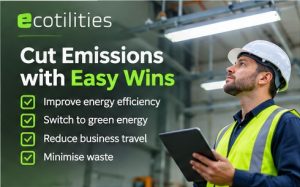
Most businesses can cut their carbon footprint by 20-30% with relatively simple changes:
- Energy efficiency first. This is usually the cheapest and fastest way to reduce emissions. Smart thermostats, LED lighting, and energy-efficient equipment often pay for themselves within 18 months through energy savings.
- Review your energy supplier. Switching to a green energy tariff can dramatically reduce your carbon footprint overnight, often with minimal cost increase.
- Look at your travel. Can some meetings be done virtually? Can you consolidate trips? Are there more efficient routes?
- Waste reduction. Less waste means lower disposal costs and reduced emissions. Start with simple recycling programs and work up from there.
Step 4: Renewable Energy (Easier Than You Think)
Renewable energy is often the biggest single step you can take toward net zero. And no, you don’t necessarily need to install solar panels to benefit.
- Green energy tariffs let you buy renewable electricity from your current supplier, often for just a small premium over standard rates.
- Funded solar panels mean you can get renewable energy with no upfront costs (we covered this in detail in our solar guide).
- Group buying schemes let smaller businesses access renewable energy deals typically only available to large companies.
The key is finding the right approach for your business size and situation.
Step 5: What You Can’t Eliminate, Offset Properly
Even with the best efficiency measures and renewable energy, most businesses will have some remaining emissions. This is where carbon offsetting comes in, but do it right.
- Choose verified projects. Look for certifications like Gold Standard or Verified Carbon Standard. Avoid cheap offsets that sound too good to be true, because they usually are.
- Focus on reduction first. Offsetting should be the last resort, not the first option. It’s much better to not create emissions in the first place.
- Local projects often work better. UK-based reforestation or renewable energy projects are easier to verify and often more cost-effective than overseas schemes.
Staying Compliant (Without the Headaches)
The UK’s net zero regulations are complex and changing rapidly. Here’s what most businesses need to know:
Mandatory reporting is expanding beyond just large companies. Even if you’re not required to report yet, having systems in place now makes compliance easier later.
Supply chain requirements mean your larger customers may start requiring sustainability reporting from suppliers.
Building regulations are getting stricter, particularly around energy efficiency and heating systems.
Rather than trying to navigate this alone, consider working with specialists who can keep track of changing requirements and ensure you’re compliant.
The Money Side: What This Actually Costs
Let’s talk numbers because this is probably what you’re most worried about.
Initial assessment: £500-£2,000 for a professional carbon footprint calculation, or free if you do it yourself with online tools.
Quick wins: Energy efficiency measures typically cost £1,000-£10,000 but often pay for themselves within 2 years through reduced energy bills.
Renewable energy: Green energy tariffs might add 10-15% to your electricity costs, but funded solar can actually reduce your energy costs from day one.
Offsetting: High-quality offsets typically cost £15-£30 per tonne of CO2, so a small business might spend £500-£2,000 per year.
Professional help: Net zero consultancy can range from £2,000 for a basic plan to £20,000+ for comprehensive programs.
Many businesses find that energy savings offset most of these costs, and some actually save money overall.
Getting Professional Help
You don’t have to figure this out alone. There are specialists who can help with everything from initial assessments to full net zero strategies.
Ecotilities offers net zero consulting services that can help you navigate the complexities of carbon reduction while identifying cost-saving opportunities. They understand that small and medium businesses need practical, affordable solutions rather than expensive, overcomplicated programs.
Look for advisors who:
- Understand your industry and business size
- Focus on cost-effective solutions
- Can help with both compliance and cost reduction
- Offer ongoing support, not just one-off reports
Measuring Progress (Keep It Simple)
You don’t need complex software to track your progress. Start with basic measurements:
Monthly energy usage from your bills Annual fuel consumption from receipts and records Business travel miles from expense reports Waste disposal amounts from your waste management company
Set up a simple spreadsheet to track these monthly. Once a year, recalculate your carbon footprint to see your progress.
As you get more sophisticated, you can invest in energy monitoring systems and carbon accounting software, but don’t let the perfect be the enemy of the good.
The Conclusion
A net zero strategy isn’t just about saving the planet (though that’s important). It’s about future-proofing your business, reducing operating costs, and staying competitive in a world where environmental responsibility is becoming table stakes.
You don’t need to transform your entire business overnight. Start with understanding where you are, make some quick improvements, and build from there.
If you’re ready to develop a practical net zero strategy that makes sense for your business and budget, Ecotilities’ net zero services can help you create a plan that works in the real world, not just on paper.
The question isn’t whether your business will need to address its carbon footprint – it’s whether you’ll do it proactively while saving money, or reactively when compliance becomes mandatory and more expensive.