
Updated: 30 October 2026
Fuel costs remain an important concern for UK motorists and businesses that depend on road transport. In its Autumn Budget on 28 October 2026, the Government announced that it would extend the existing 5p-per-litre fuel duty cut until 1 July 2027.
The decision means drivers will continue to benefit from the reduced fuel duty rate for another six months, rather than facing the planned return of the 5p reduction in January 2027.
But what does this actually mean for consumers? Will petrol and diesel prices fall, how could businesses benefit, and what happens after July 2027?
What has the Government announced?
The Government has confirmed an extension of the existing temporary 5p-per-litre cut in fuel duty until 1 July 2027.
The reduction was originally introduced in March 2022 to provide relief when fuel prices were rising sharply. It has been extended several times since then.
Under the latest announcement, the Government will cancel the planned restoration of the 5p reduction from January 2027 and defer the planned inflation-linked increase in fuel duty until 1 July 2027.
This is an extension of an existing tax reduction, rather than a new 5p cut on top of the reduction motorists already receive.
The policy is intended to provide continued support for motorists and businesses facing high fuel costs.
Official source: Budget 2026 — GOV.UK.
What is fuel duty?
Fuel duty is a tax charged on fuel such as petrol and diesel. It forms part of the price motorists pay when they refuel their vehicles.
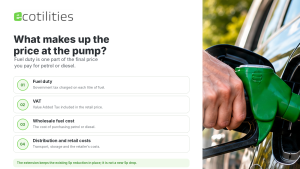
The amount charged in fuel duty is one component of the final price at the pump. Other factors include the wholesale cost of fuel, exchange rates, distribution costs, retailer margins and VAT.
When the Government reduces fuel duty, it reduces the tax component of the fuel price. However, the final price motorists pay is still influenced by these other factors.
This distinction matters when assessing the benefit of the extended reduction.
How will consumers benefit from the 5p fuel duty cut?
1. The existing reduction will remain in place for longer
The most direct benefit is that motorists will continue to benefit from the existing reduced fuel duty rate until 1 July 2027.
Without the extension, the Government had planned to begin restoring the 5p reduction from January 2027.
Extending the cut therefore avoids that planned increase for a further six months.
For motorists who regularly buy petrol or diesel, keeping the tax reduction in place can help limit the pressure on their fuel budgets.
2. Drivers can benefit when managing household expenses
Fuel is a regular expense for many households, particularly those that rely on cars for commuting, school runs, shopping and other essential journeys.
Keeping fuel duty lower for longer provides continued support against the cost of filling up.
The actual financial benefit for each household will depend on how much fuel it buys and the prices charged by retailers.
3. Businesses that rely on vehicles receive continued relief
The extension is also relevant to businesses that use vehicles to deliver products, transport goods, visit customers or provide services at different locations.
Examples include delivery companies, tradespeople, field-service businesses and organisations operating vehicle fleets.
Fuel costs can affect the overall cost of doing business. Keeping the existing duty reduction in place for longer can help limit one element of that expenditure.
However, the amount a business saves will depend on its fuel consumption, vehicle use and the prices it pays.
4. Transport operators gain more time before the planned tax increase
Businesses operating vans, lorries and other commercial vehicles often purchase substantial quantities of fuel.
For these operators, changes in fuel duty can have a meaningful effect on operating costs.
The extension delays the planned restoration of the 5p reduction, providing a longer period of relief for qualifying fuel purchases.
The Government has also highlighted the cumulative effect of its fuel-duty decisions across this Parliament. Those wider estimates should not be confused with the savings from this six-month extension alone.
Will petrol and diesel prices fall by 5p per litre?
Not necessarily.
Although the Government is extending the 5p-per-litre fuel duty cut, this does not mean motorists will automatically see petrol and diesel prices fall by a further 5p at the pump.
The reduction is already reflected in the existing fuel duty arrangements. The extension keeps it in place for longer instead of allowing the planned restoration to proceed in January 2027.
The price motorists actually pay will continue to depend on market conditions and decisions made throughout the fuel supply chain.
For example, a change in wholesale fuel prices or the exchange rate can influence pump prices even when fuel duty remains unchanged.
Drivers should therefore distinguish between the continuation of tax relief and an immediate reduction in the retail price of fuel.

When will the 5p fuel duty cut end?
Under the Government’s announcement, the existing temporary reduction is extended until 1 July 2027.
The Government has said that fuel duty rates will then return to the levels that applied before the temporary 5p cut was introduced in March 2022, with rates also being adjusted in line with the Retail Prices Index.
The timing and details matter for both households and businesses planning their budgets.
Anyone responsible for managing transport expenditure should factor the announced timetable into their forward planning while recognising that actual fuel prices can change for other reasons.
What should motorists and businesses do now?
Although the extension offers continued relief, fuel duty is only one part of the cost of running a vehicle or fleet.
Motorists and businesses can take practical steps to manage their overall expenditure.
Monitor fuel spending. Track how much you spend each month and identify significant changes in consumption or price.
Improve journey planning. Combining trips and avoiding unnecessary mileage can help reduce fuel consumption.
Maintain vehicles properly. Appropriate servicing and tyre maintenance can support fuel efficiency and reduce avoidable operating costs.
Review fleet usage. Businesses should assess whether vehicles are being used efficiently and whether routes can be improved.
Budget for future changes. The extension currently runs until 1 July 2027, so businesses should avoid assuming that the reduced duty will continue indefinitely.
What does this mean for wider business costs?
For businesses, transport expenditure is only one part of the operating-cost picture.
Electricity, gas, waste management and other overheads can also affect profitability. While the fuel duty announcement does not directly change commercial energy tariffs, it is a useful reminder of the importance of monitoring costs across the business.
Companies that want to review their business gas and electricity arrangements can explore Ecotilities’ gas and electricity services.
Understanding the different components of operating expenditure can help businesses make more informed decisions about budgeting and cost control.
The bottom line
The Government’s extension of the 5p fuel duty cut provides continued tax relief for UK motorists and businesses until 1 July 2027.
The main benefit is that the existing reduction will remain in place for another six months instead of being restored from January 2027 as previously planned.
However, the extension does not guarantee an immediate 5p reduction in pump prices. Wholesale fuel costs, exchange rates and retailer pricing will continue to influence what consumers pay.
For households and businesses alike, the best approach is to understand the change, monitor fuel expenditure and plan ahead for the announced end date.
Official source: Budget 2026 — GOV.UK.